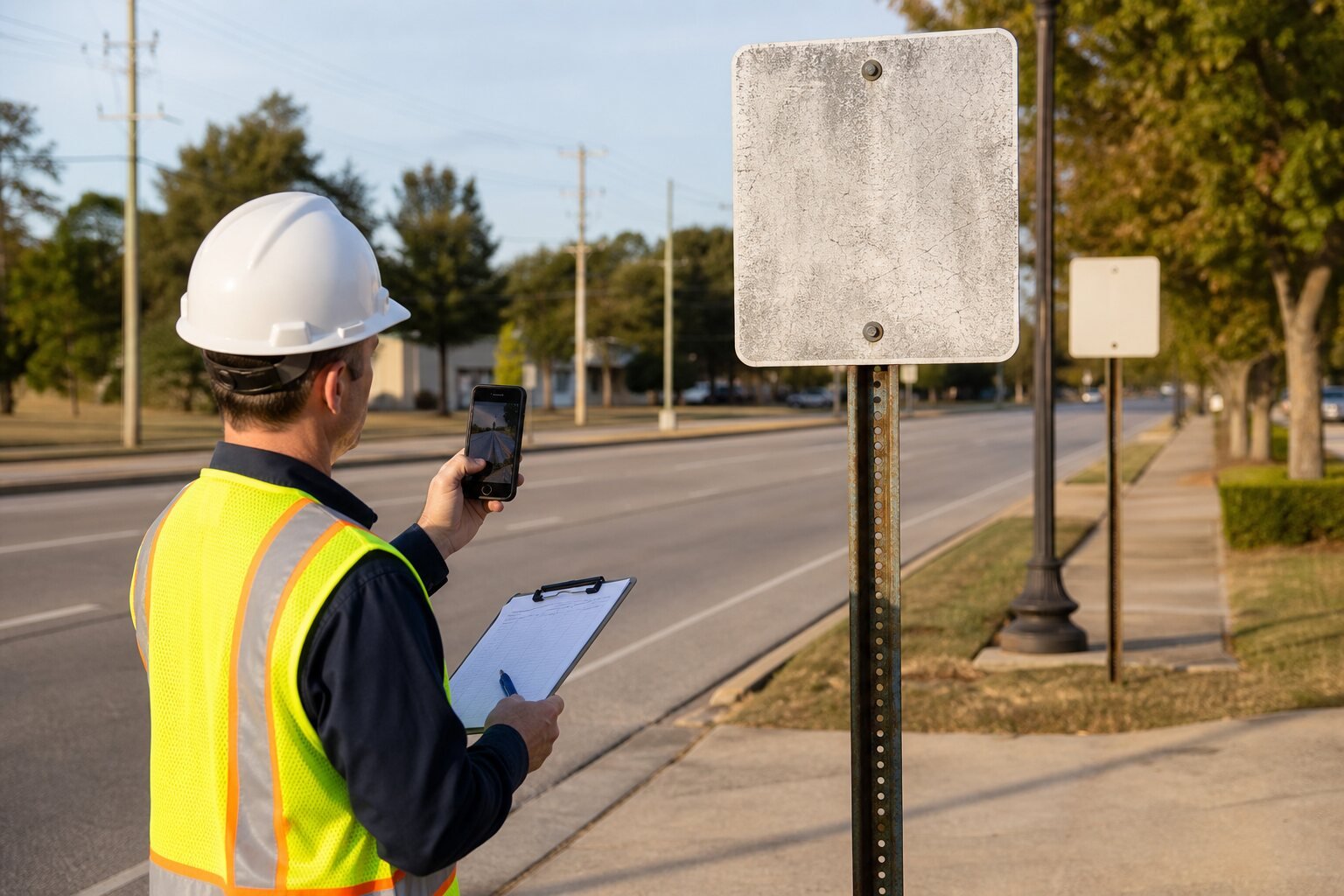
A sign replacement audit creates a consistent record of location, message, visibility, condition, support, and urgency so limited maintenance resources can be prioritized.
Not every faded or damaged sign carries the same risk. Regulatory function, crash exposure, nighttime visibility, obstruction, and structural condition all matter.
Traffic Sign Replacement Audit: an expert checklist
- Assign a unique location or asset identifier
- Photograph the sign face and approach view
- Record damage, fading, orientation, and obstruction
- Check post, base, mounting hardware, and nearby conflicts
- Prioritize by function, condition, and applicable requirements
Use a repeatable rating method and retain inspection dates. Replacement decisions should follow the owner or agency's standards rather than an improvised visual threshold.
How to make the next decision
Start with documented conditions rather than assumptions. Safety Network Traffic Plans provides information and services relevant to traffic sign replacement audit; the correct scope still depends on the property, equipment, documents, or project conditions involved.
Review the related guidance on traffic sign consulting and traffic sign design manufacturing. These pages explain the available service context before you request a site-specific recommendation.
Questions to ask a provider
- What information do you need before recommending a scope?
- Which assumptions still need field verification?
- What is included, excluded, and documented?
- What conditions would change the recommendation?
Clear answers help customers compare scope and process instead of choosing from a headline alone. Keep records, photos, plans, model numbers, or ownership documents that are relevant to the service.
Frequently asked questions
Which signs should be reviewed first?
Prioritize critical regulatory and warning functions, reported damage, poor nighttime visibility, and unstable supports according to agency policy.
Can cleaning restore a sign?
It may improve dirt-covered signs when permitted, but it does not reverse material aging, delamination, fading, or physical damage.
Why photograph the driver's approach?
A face-on photo may miss vegetation, curves, glare, competing signs, or other factors affecting recognition.
Should replacement records include materials?
Yes. Recording sign, sheeting, substrate, support, and installation information supports future maintenance planning.
Request a business-specific review
Use the Safety Network Traffic Plans contact or scheduling page to describe your situation and confirm the appropriate next step.