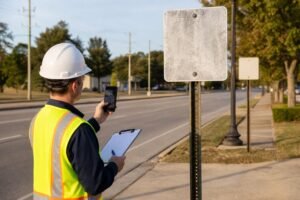
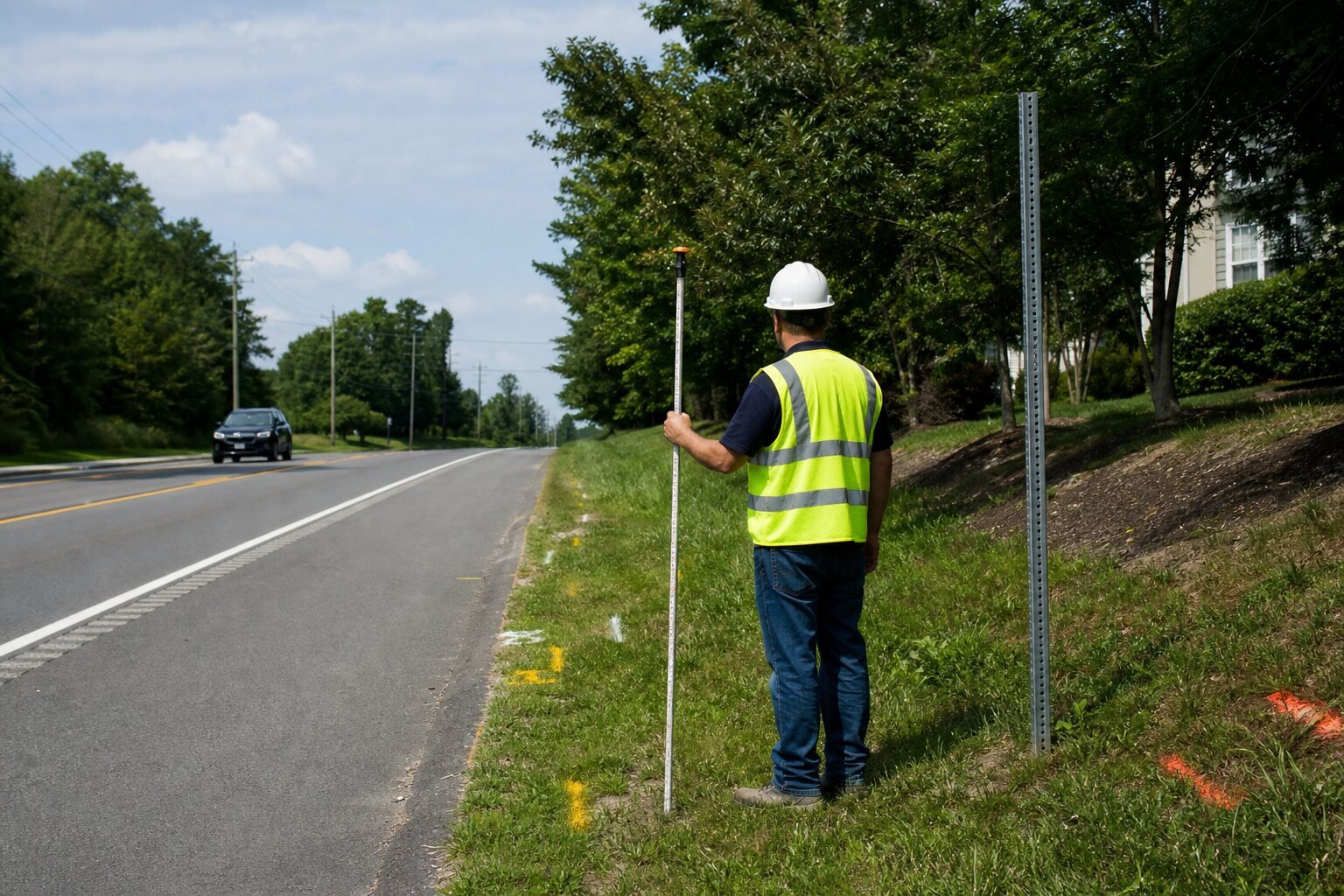
A traffic sign installation assessment confirms placement, visibility, mounting, utilities, roadside conditions, access, and conflicts before crews begin work.
A sign built correctly can still perform poorly if vegetation, parked vehicles, curves, lighting, other signs, or roadside objects block the intended view.
What a Traffic Sign Installation Site Assessment Should Cover: an expert checklist
- Confirm sign schedule, stationing, and orientation
- Check sightlines from the intended approach
- Identify utilities and underground conflicts
- Review post type, foundation, height, and offset
- Plan safe crew access and traffic protection
Field conditions should be compared with drawings and agency requirements. When they conflict, resolve the issue before installation rather than improvising a permanent location.
How to make the next decision
Start with documented conditions rather than assumptions. Safety Network Traffic Plans provides information and services relevant to traffic sign installation site assessment; the correct scope still depends on the property, equipment, documents, or project conditions involved.
Review the related guidance on traffic sign installation and traffic sign consulting. These pages explain the available service context before you request a site-specific recommendation.
Questions to ask a provider
- What information do you need before recommending a scope?
- Which assumptions still need field verification?
- What is included, excluded, and documented?
- What conditions would change the recommendation?
Clear answers help customers compare scope and process instead of choosing from a headline alone. Keep records, photos, plans, model numbers, or ownership documents that are relevant to the service.
Frequently asked questions
Why check sightlines before installation?
Drivers need adequate time to see, read, understand, and respond to the sign.
Who locates underground utilities?
Follow the applicable utility-notification and project process before excavation.
Can a sign be moved to avoid a conflict?
Only through the appropriate approval process because a location change may affect compliance and visibility.
Should existing signs be inventoried?
Yes. Existing messages, condition, supports, and conflicts help prevent duplication or contradictory information.
Request a business-specific review
Use the Safety Network Traffic Plans contact or scheduling page to describe your situation and confirm the appropriate next step.